 Safety & Guides
Ha Giang Easy Rider Loop: The Complete Safety Guide
Is the Ha Giang Loop dangerous? Yes—steep mountain passes, sharp bends, unpredictable weather, and rockslides make it one of Vietnam's riskiest motorbike routes, especially for inexperienced riders.
 Weather & Seasons
Ha Giang Weather by Month: The Complete Guide to Planning Your Visit
Ha Giang's climate is characterized by four distinct seasons and dramatic elevation-based variations, with annual temperatures ranging from 21.6–23.9°C (71–75°F) in valleys to freezing conditions at mountain peaks. The province experiences heavy rainfall averaging 2,300–2,400 mm annually, concentrated during the May–September monsoon season, while the dry season spans November to April. Mountain microclimates create rapid weather shifts throughout the day, with high passes like Dong Van and Meo Vac significantly colder than lower areas. Winter brings frost and occasional light snow to higher elevations, while summer features afternoon thunderstorms and lush greenery across this humid subtropical highland region.
 Culture & Traditions
Ha Giang Ethnic Minorities: A Guide to the People, Traditions, and Villages
Ha Giang province is home to 43 recognized ethnic minority groups, with the Mong representing 34.25% of the population, followed by Tay (22.55%), Dao (14.88%), Vietnamese (12.32%), and Nung (9.53%). These diverse communities maintain distinct cultural identities through traditional practices including unique architectural styles like earthen-walled homes and stilted houses, vibrant festivals, traditional music and dance, and artisan crafts. While subsistence farming remains central to their livelihoods, these ethnic groups form a rich cultural tapestry that defines Ha Giang's identity and increasingly attracts cultural tourism to the region.
 Highland Food & Stays
Highland Food and Stays in Ha Giang: The Complete Guide
Ha Giang Province's cuisine showcases authentic mountain flavors shaped by ethnic minority traditions, featuring hearty dishes like bánh cuốn with pork and wood-ear mushrooms, thang co buckwheat cakes, and vibrant xoi ngu sac five-colored sticky rice. These meals are prepared using locally sourced ingredients and time-honored cooking methods passed down through generations by the Hmong, Tay, Dao, and Lo Lo communities. The food reflects the mountainous environment with warm, filling preparations designed to counter the cold climate. While scientific nutritional data is limited, the cuisine remains less commercialized than in major Vietnamese cities, offering travelers an authentic taste of northern Vietnam's culinary heritage.
 Packing & Travel Tips
Ha Giang Loop Packing List: Everything You Actually Need (Nothing You Don't)
Planning a multi-day motorcycle journey through Southeast Asia's mountainous terrain requires strategic preparation to navigate challenging conditions safely. For routes like Vietnam's Ha Giang Loop, dual-sport motorcycles (250cc-300cc) with long-travel suspension handle steep inclines and unpaved roads most effectively, while essential documentation includes valid driver's licenses, international driving permits, and comprehensive travel insurance.
 Safety & Guides
Ha Giang Loop 3 Day Itinerary: Complete Route Guide & Tips
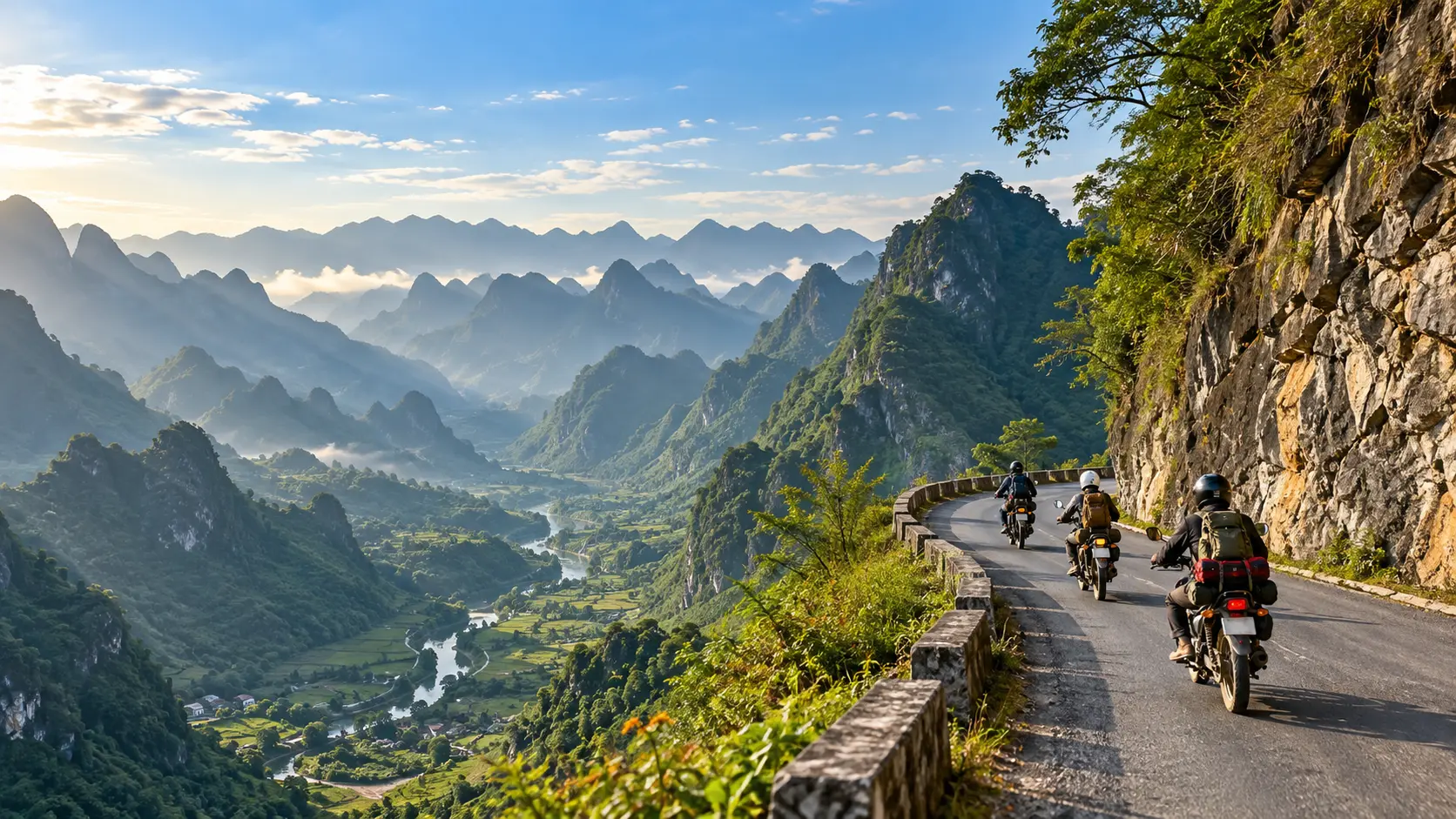
The Ha Giang Loop is Vietnam's most spectacular motorbike adventure, typically completed over 3 days covering approximately 350km through dramatic mountain passes and ethnic minority villages. The standard route takes you from Ha Giang City through Quan Ba's Heaven Gate, past Dong Van's stunning karst plateau, around Meo Vac's legendary Ma Pi Leng Pass, and back—offering breathtaking scenery at every turn.
 Safety & Guides
Ha Giang Loop 4-Day Itinerary: Complete Route Guide & Tips
The Ha Giang Loop route typically spans 3-4 days covering approximately 350km through northern Vietnam's mountainous landscapes, starting and ending in Ha Giang City. Most travelers follow a counterclockwise path through key stops including Quan Ba (Heaven's Gate), Yen Minh, Dong Van, Meo Vac (Ma Pi Leng Pass), and Du Gia before returning to the starting point.